Wat Plai Laem
 Tinnawut Kaewnikhom
Last updated: 28 Dec 2025
555 Views
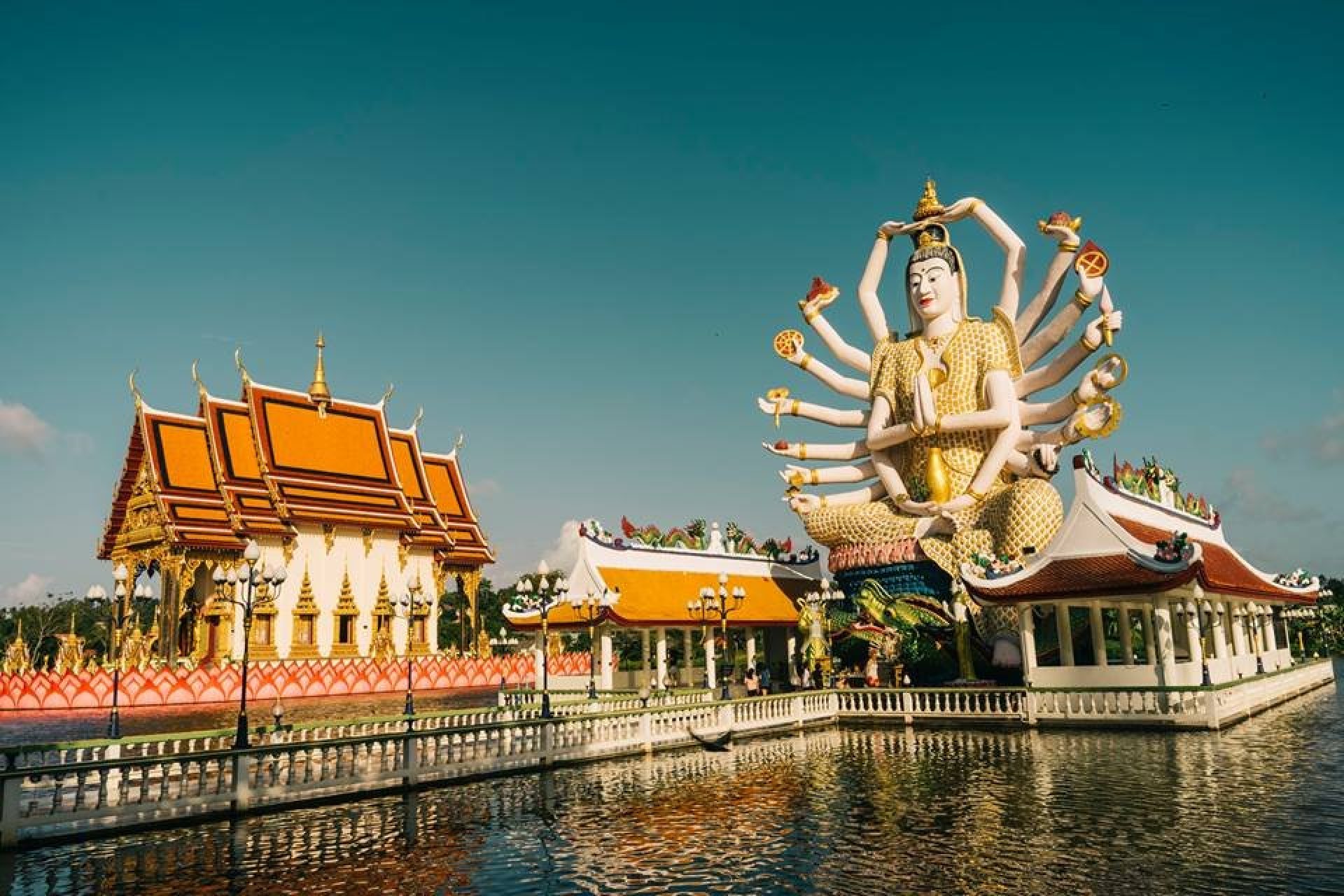
Wat Plai Laem is one of Samui's most iconic and visually stunning Buddhist compounds. Located on the north coast of Koh Samui, Thailand, it offers a fascinating insight into Chinese-Thai beliefs and Buddhist art.
The Spirit of Wat Plai Laem
Wat Plai Laem is a modern Buddhist temple that showcases the island’s strong Chinese heritage. Unlike the more ancient temples in Thailand, this complex is celebrated for its vibrant colors, intricate murals, and massive statues that sit atop a large lake.
The most striking feature of the temple is the towering white statue of Guanyin, the Goddess of Mercy and Compassion.
- Symbolism : She is depicted with 18 arms, symbolizing her ability to reach out and help people all over the world.
- Significance : Many locals come here to pray for health, protection, and fertility. The statue sits on a platform in the middle of the lake, creating a majestic reflection on the water.
Opposite the Guanyin statue is another massive figure: a giant, golden Laughing Buddha (Maitreya).
- Meaning : In Chinese culture, the fat, laughing Buddha represents wealth, prosperity, and happiness.
- Visuals : His bright orange robes and jovial expression make him a favorite spot for photography, but he also serves as a reminder of the joy found in spiritual abundance.
The central part of the temple features a beautiful Ubosot (ordination hall) built on an artificial island in the shape of a lotus flower.
Architecture :
- The building is decorated with exquisite Thai woodcarvings and gold leaf.
- Interior : Inside, you will find stunning murals that tell the life story of the Buddha, known as the Jataka tales.
A Living Sanctuary
Wat Plai Laem is not just a tourist attraction, but a vibrant place of worship.
- The Lake : The temple is surrounded by a large lake teeming with fish. For a small donation, visitors can buy a bag of fish food. Feeding the fish is considered a way of making "merit" (good karma) in Buddhist tradition.
- Artistic Heritage : Much of the temple’s art was created by one of Thailand’s most famous artists, Jarrit Phumdonming, who spent over three years completing the intricate designs.


Related Content