Similan Islands
 Tinnawut Kaewnikhom
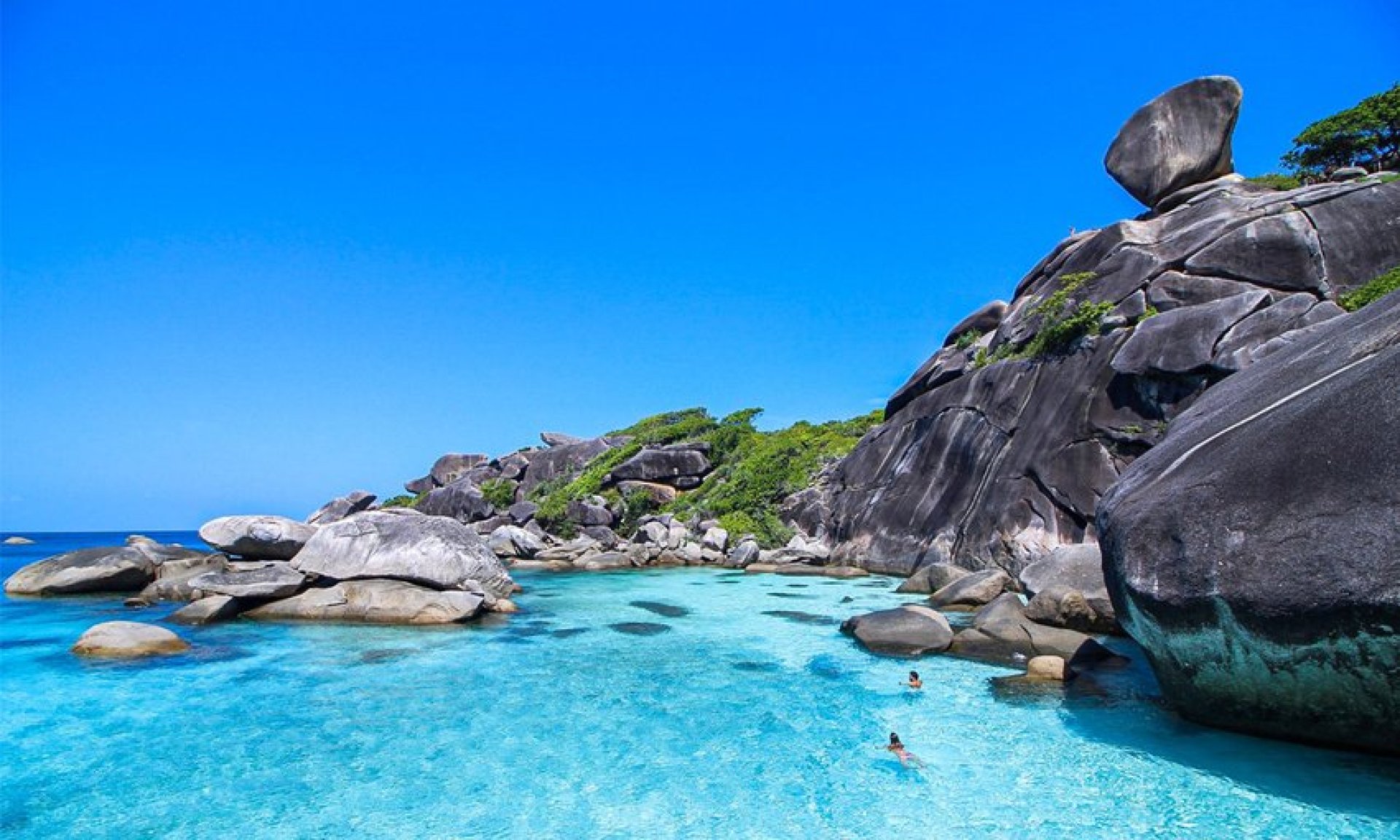
The Similan Islands are widely considered the crown jewel of the Andaman Sea. Located about 70 kilometers off the coast of Phang Nga, this archipelago consists of eleven islands (though the name "Similan" comes from the Yawi word sembilan, meaning "nine").
The Similan Islands : An Underwater Paradise
The Similan Islands are protected as a National Park, ensuring that their raw, natural beauty remains preserved. They are world-renowned for two things: blindingly white coral sand beaches and crystal-clear turquoise waters that offer some of the best visibility in the world.
Iconic Landmarks : Sailing Boat Rock
The most famous image of the Similans is Donald Duck Bay on Island No. 8, home to the Sailing Boat Rock (Hin Huakao). This massive, gravity-defying boulder sits perched on a cliffside. Visitors can hike up to the viewpoint for a breathtaking panoramic view of the horseshoe-shaped bay and the gradient of blue water below.
A World-Class Diving Destination
For scuba divers and snorkelers, the Similans are legendary. The underwater topography is diverse, featuring:
Deep-sea Boulders : Massive granite rocks under the water create dramatic canyons, tunnels, and swim-throughs.
Coral Gardens : Vibrant soft and hard corals provide a home to a staggering array of marine life.
Megafauna: It is one of the best places in Thailand to spot Manta Rays and Whale Sharks, especially at sites like Richelieu Rock (often accessed via Similan trips). Youll also see sea turtles, clownfish (Nemo), and schools of colorful tropical fish.
Pristine Nature and Conservation
To protect the fragile ecosystem, the islands are closed to tourists during the monsoon season (usually from mid-May to mid-October). The Thai government also limits the number of daily visitors to prevent overcrowding. This strict conservation effort ensures that the beaches remain "postcard-perfect" and the coral reefs have time to recover.
Unique Geography
Unlike many other Thai islands that are made of limestone, the Similans are made of Granite. This accounts for the unique smooth, rounded boulders scattered across the beaches and hidden beneath the waves, creating a landscape that looks almost otherworldly compared to the jagged cliffs of Phang Nga Bay.